Thursday, October 22, 2020

 10月ぐらいで、新しいコロナウィルすの事情の始まりまだ、約毎日、歩いてAnkiで日本語を練習します。ゆっくり習います。

最近日本語レベルリーダーを読みます。「落語」の物語を読みます、今。少ない言葉がわかりませんけど、ほとんどのものをわかります。

難しかったな!けど楽しかったたぶんよ。

「日本人が知らない日本語」のビデオを見ました。あまりに難しかったね!


Wednesday, September 16, 2020

私の事情、今

 6?9?月(ぐらい)、Ankiと読書(大東京ビンボー生活マニュアル、日本語Graded Readers、レシピ)で、勉強と練習をしました、から、そのポーストを書くことができますよ。

Facebookの日本語グループ、ありがとうございました。多分手伝いました。

読書がまだ難しい、そして聞くことがあまりできません。でも、嬉しい、去年よりかんたんの方がだよ。

So Anki + reading things I enjoy at long last is working. May it do the same for you.

Sunday, January 12, 2020

An old-fashioned way to say "no."

Got some help from the FB group 日本語, understanding this panel from 大東京ビンボ―生活マニュアル. They say drop the -u at the end of a verb; replace with -a and add ず, and you have an old-fashioned but still used way of saying ないで ("don't" or "without...").

I tried all the different verb endings, both -ru and -iru/-eru, plus the two irregulars する and 来る, and Google Translate agrees they mean what's predicted. I'd say we're good.

食べらず。
買あず。帰らず。待たず。書かず。泳がず。死なず。飛ばず。飲まず。話さず。
来らず。しらず。


Fits 彼女's personality: she is competent and polite, and she's at a traditional event, so it makes sense she'd go a little retro in her speech.

Friday, January 10, 2020

(Mostly) automated construction of Anki flashcards

So I have a new method, and it's not terrible. :)

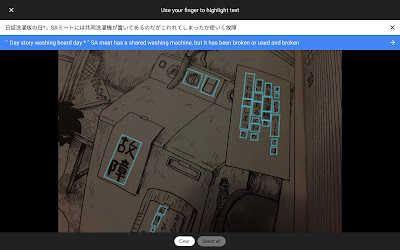
Get the text in. If it's a web page, I cut and paste. If it's a printed page, I use the Google Translate app. (As you can see, it struggles sometimes, but it's better than digging it all out myself.)


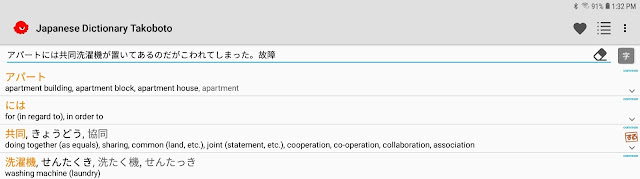
Put it in the Takoboto app. This picks out keywords. I select the ones and put them in a list.
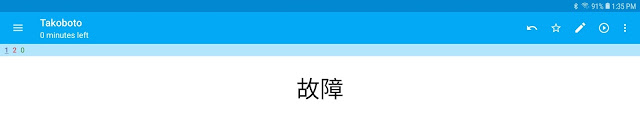
Then I send that list to AnkiDroid. (Don't send each card -- the rest of this won't work.)

Problem was that it gave me a card that either was English->Japanese; or if Japanese->English, shows the furigana on the front with the kanji. But I want to have to provide the pronunciation, so I want it on the back.

I went into Anki on the PC (it's too hard to edit on the tablet), Tools > Manage Note Types > jp.takoboto > Cards, made sure Japanese > English was selected, and edited appropriately (the cards are written in HTML).

It's working for now at least.

私のレシピ:砂糖なしのきんぴら

材料
にんじん 2本
茸の出汁 1/2 杯分
酒             1 大さじ
醤油         1/2 大さじ
ごま油     1小さじ
米酢         1小さじ

作り方
にんじんを千切りになる。鍋の中に全部を入れる,弱火する、20分少くなくとも、にんじんが柔らかくまで。かんたんね!

Thursday, December 12, 2019

単語 (vocabulary)

Trying a new trick; not done with it.

First, I've been able to get Anki to stop being so hard I can't learn (I tend to forget the word as soon as I'm no longer looking at the flashcard). Bury enough cards that you've only got like 3; then learn them.

I want to automate the process.  Looks like someone's gone a long way toward it:

https://nihongo-e-na.com/eng/hint/id750_1.html

This gets you an Excel spreadsheet with the word; the ふりがな; and the English meaning.

This page looks like it has a way to convert Excel to Anki by way of a .csv file:

https://www.quora.com/How-can-I-make-my-Excel-list-turn-into-a-Anki-deck

I haven't tested it yet, but will soon.

Friday, November 29, 2019

精進料理

精進料理 (Shoujin ryouri, Japanese Buddhist monk cuisine) is vegan, healthy, simple, and...maybe too simple. I've been looking through the "Look inside!" excerpt on Amazon Japan. Carrot soup: carrots, butter, salt, water. Yeah, I think I see that. But I'm spoiled.

Still, I'm getting a lot from these recipes. にんじん、ばたー、塩、水.材料;作りの方.

来週ポテトサラダを作りますよ:パセリとマスタードをいれます。ごぼう(burdocks)のご飯ーーたぶん;にんじんを使います、でも、ごぼうがバージニアにあります。英語の料理本と、カレーのカリフアワーのタコス、「秋のボール」(日本の文化であること、わかりません)、昼ご飯の作ります。最近(these days)、料理が大好きです!

Thursday, November 28, 2019

レシピたち

一年ぐらいがありました。忙しかったーとても!本を書きました。違うことたちありました。
一こと:exercise, good health, healthy調理. と楽しかったね。でもー日本語にconnect withできますか?[If all that's too garbled... One thing: exercise, good health, healthy cooking [I guess that's one thing]. It's been lots of fun. But--can I connect it with Japanese?
はい、すごい。ウェブサイトがfound.  ここ少しがあります:

https://cookpad.com/
https://www.oishiiamerica.com/
https://www.orangepage.net/

I figure the small subject area will make me able to handle vocabulary (I hope!) in this limited area.

I forget words almost as soon as I read them, I'm afraid. But I already got 小さじand大さじ(teaspoon and tablespoon -- how happy I am to not have to learn metric for everything!).

I'm back in Kanji Study and have reinstalled Anki. Maybe I'll post the Anki deck I'm creating for cooking later.

And I am very excited to have found and ordered Grandma's Shojin Ryori -- a book on how to do the shoujin ryouri, Buddhist/vegan style of cooking, which is rare, mostly I just see picture books (!) -- and I got it in Japanese -- and I ordered it from the U.S. so it won't cost my firstborn in shipping.

Friday, August 31, 2018

2018の洪水

Something I posted recently on FB.  Had to look up some 言葉。ここあります。

dam     ダム
flood    洪水
lake              湖
basement  地下
drain         排水する
died                死亡しました
got repaired   修理されました
All are safe    誰もが安全です。

I am less confident than usual that my translations are correct. 

Here's the post.  I know it's clunky.  We learn by doing.

3週間前に、私の近い湖は洪水がありました。私の家の地下が水ありました。町は湖を排水しました。今日(金曜日)湖のダムが修理されました、そして、あの道の上で運転するができます。誰もが安全です、うれしいですね。


Saturday, August 25, 2018

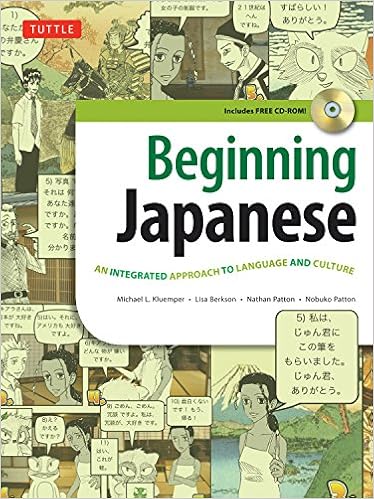
Beginning Japanese by Kluempler

This textbook is looking pretty cool.

OK, I don't know if it would be good for true beginners.  Chapter 1 and we're already seeing kanji.  But for practice reading, I am loving it.

I wonder why I never heard about this online?  My wife found it in the new books section at the library.  It's obviously a school textbook.  Maybe it's too new.  Maybe people think school textbooks are icky.

Looking forward to some reading practice that, I hope, won't have me running to the dictionary 3 times per sentence.

(Oh, and it's cheap, too:  $20 to Genki's $40 and JfZ!'s $30.


Tuesday, July 3, 2018

Japanese Graded Readers 2:2:7: わらしべ長者

 わらしべ : dried rice stalk
長者   :millionaire
一生懸命 :hard, as in hard work
観音様  :the bodhisattva representing/embodying compassion
拾う   :pick up
捨てない :don't throw away
転びました:fell
向こう  :beyond
みかん  :Mandarin orange
喜びました:was delighted
布    :cloth
また   :also
まだ   :still
まで   :until

(Sounds like I need a mnemonic!  Mada:  mah doll is still here -- I still play with dolls.  Mata -- mah top is here also.  Made:  but mah day is approaching when I'll stop playing with toys.  ... We'll see how this goes.)

倒れて  :fell down
横    :side
やりました:did it (or:  Yay!  I did it!)
すると  :then
連れて  :bring
通る   :pass through
遠く   :far away
五年前  :five years ago
呼びました:called


Saturday, June 2, 2018

Japanese Graded Readers 3:1:4: この人だあれ? Part 1: 野口英雄

Some of these I didn't get to the point of certainty on.  Still, this is what I have.

だあれ?   Who's that?
お札     paper money
技術     technology
進んで       advance
偽札     counterfeit money
言われています people say...
野口英雄   Hideo Naguchi, bacteriologist
まま     as it is
すぐ     soon?
貧乏        poverty
使って       use (up?)
しまう    cause
一生懸命   hard, as in hard work
よくなりました improved
囲炉裏                fire pit/sunken hearth    
頃      time of
開かなく      doesn't open.  Can't open? 
負けない      as much as possible/unsurpassably
手術     surgery
頑張って   did a fine job of?
成績     achievement
高等小学校        Some level of school.  Random guy on Internet thinks it's grades 5-8 or 7-8, but the term is no longer used.  "Junior high," I suppose.
出してくれました  took out? NO
ずっと                forever
助けました        helped
生物     living thing
のように   like
試験     test
合格     success
変わった   changed
研究     research
やっと       at last
周り     vicinity
のか?    isn't it?
細菌     bacteria
数年     several/few years
博士     PhD.
一生懸命   with utmost effort
何度     many times
以上     more
いられません can't go
しか     only
黄熱病    yellow fever
調べ     investigation
制回収    recovery (ed: check this)
墓      tomb


Saturday, May 19, 2018

Japanese Graded Readers 3:1:2: 注文の多い料理店

注文                orders
料理店   restaurant
きっと            fer sure
鉄砲    gun
撃ちたい       want to shoot
案内               guide
急に            suddenly
倒れます       collapse
もちろん       of course
廊下               corridor
喜んで          with pleasure
だけれど      although
賑やか    bustling (-na adjective)
かかって   hanging.  If I read this right, the pic is wrong, which has the 鏡 hanging on the wall, not a 戸
こう     like this
し                  used to list "reasons for multiple states and actions." So it's something like a conjunction.  Works for adjectives at the very least.
おかしい  strange (-na adjective I think)
脱いで    take off (clothes)
裏                  back
ネクタイペン  Tie pin.  I can't figure what this really is, as it's a strange thing to expect a hunter to wear.
財布              wallet
香水              perfume
入れ物          container
塩                  salt
変                  strange, unexpected, suspicious
鍵穴              keyhole
がたがた      rattle
震える          tremble
消えました  disappeared
鳴き              squeal
呼んで          call
安心              relief


Friday, May 18, 2018

Reading aloud to 息子

I've been reading these graded readers aloud to 息子.大丈夫です。妻も聞きます。I read a phrase and translate.  He's interested enough in the story to tolerate the slowness; I hope he is getting some of the endlessly repeated phrases (言いました、鈴木さんのバスは、など).
I don't read the ones in which you get attached to an animal and the animal dies.  Or the one about the dying girl's last wish (admittedly, an import from O'Henry).  Tell you what, you have to grow up fast in Japan, if these books are any guide.

Monday, May 7, 2018

And now, an opinion on how to learn

I am commonly seeing on Reddit r/LearnJapanese this question in various forms:

"Wouldn't it be easier to learn Japanese if I don't bother with X?"  X is:  reading; writing; learning kanji; doing something that isn't in my textbook.  (Come to think of it, I hear this at home too.  Just sayin'.)

They often get this correct response:  If you don't know how to read/use kanji/whatever, you're illiterate.  Or maybe support:  you don't need to write kanji.  Just type them in the keyboard like we imagine real Japanese native speakers do exclusively.

But here's a more compelling reason (compelling, at least, to those who say "I just want to converse/watch anime/whatever; I don't want to read or write):  learning the same thing different ways is easier than learning it only one way.

Suppose you were learning world history.  So you listen to a history professor give lectures.  No book; no note taking.  Would you learn it as well as if you read for yourself, took notes on what was important, summarized, talked to a classmate about the high points?

Suppose you had a list of vocabulary words.  You can go over the word list until you know them; or you can do that and write a story using them and try them in conversation and understand the roots (androgynous:  Greek andros, male, plus Greek gynos, female.  Got it).  Which way would have you remembering the most a month later?

More ways is better.  It's also a heck of a lot more fun.

End Public Service Announcement.
Tuesday, May 1, 2018

Japanese Graded Readers 2:3:11: 日本のお風呂

(たくさん言葉ですね!)

気持ち         feeling
湯                 hot water
湯船             bathtub
お風呂         bath
温泉             warm springs
蒸気             steam
蒸し風呂     steam bath
仏教             Buddhism
お坊さん     high priest
銭湯             bathhouse
江戸時代     Edo period
狭い             narrow
混浴             mixed bathing
広い             spacious
できました was made
なくなる      cease (literally "become not")
よく見る     look well
番台             place for person taking admission
壁                 wall
少なくなりました decreased
岩盤             rock bath (place to lie on hot gravel)
旅館             Japanese hotel
露天             open-air
ながら         while
裸                 nude
軽く             lightly
ゆっくり     slowly
桶                 bucket
あったところ where it was
浴衣             bathrobe/summer kimono


Friday, April 27, 2018

Japanese Graded Readers 2:3:15: 一休さんーその二ー

Since I've gotten graded readers and couldn't let them be -- kanji study can wait! -- I'm going to put some of the vocabulary here.  (Making lists of kanji here helped; maybe vocabulary will help too.)

...and brag a little more on them.  They tend to have a quirky or funny ending if the story's not 悲しい.  The story of ソーピー was too sad.  The stories of the 木村 family and 一浪さん the young policeman aren't.  Go get 'em right now.  The cheapest place I've found so far is CD Japan -- shipping is major, but the price is still better than Amazon.

Here are vocabulary from Level 2, Volume 3:  「一休さん、ーその二ー」.

安国寺                Ankokuji, a historic temple near Fukushima.
本堂                   main temple building
仏様                   Buddha
ろうそく            candle
おしょうさん     high priest
お坊さん            priest
お経                   sutra, Buddhist scripture
息をかける       breathe
困った               troubled
連れる               take someone somewhere
橋                       bridge.  (Fun fact:  it's haSHI not HAshi.  Pitch accents)
渡る                   cross over
ニコニコ           with a smile.  But it shows up here in ひらがな.
端                       edge.  (Also haSHI)
真ん中               middle


Thursday, April 26, 2018

Japanese Graded Readers 1:2:7: 寿司・すし・SUSHI

いくら                       salted salmon roe
トロ                           fatty tuna
わぁい                       Wow
まぐろ                       tuna
たい                           sea bream
赤貝                           ark shell clam
ほたて                       scallops
さび抜きて               抜きて is omit.  Best I can figure is that さび is a typo or an
                                   abbreviation for わさび. ?
ネタ                           top side of nigiri (the part that's not rice)
つけます                   apply (sauce)
鮒ずし                       a type of sushi made from salted aged fish
いなり寿司               sushi in fried tofu
押し寿司                   sushi rice and ingredients pressed in a mold
にぎり寿司/握り寿司: sushi with a blob of rice topped with something, often fish
ちらし寿司               sushi rice in a bowl with ingredients sprinkled on top
屋台:                          food cart
値段が変わります   price varies
すし飯                       sushi rice
塩鮭                           salted salmon